
The Primacy of First-Hand Recording
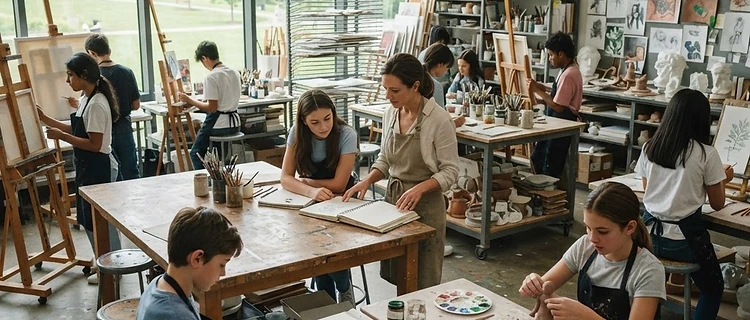
First-hand recording is the bedrock of the Cambridge IGCSE Art and Design curriculum. It requires students to move beyond secondary sources like the internet and engage directly with their environment to gather visual evidence. As teachers, your role is to facilitate environments where students observe, draw, and photograph real subjects that resonate with their personal project themes. When a student chooses to explore a theme like urban decay or local wildlife, they must demonstrate an active, physical relationship with their subject matter. Pause and reflect: how often do your students default to Google Images before stepping outside the classroom door? Try this in your classroom: next week, mandate a sketchbook walk where students must record five distinct textures from the school grounds using three different media. This encourages original observation rather than passive copying. Authenticity is not just a requirement; it is the unique fingerprint that elevates a portfolio from a collection of exercises to a cohesive artistic narrative.
Documenting the Artistic Process
Assessment Objective 2 focuses heavily on the exploration and development of ideas. Many students make the mistake of prioritizing the final piece, whereas the syllabus demands evidence of the journey itself. To successfully guide your students, you must shift the classroom culture to value experimentation, trial, and error as high-level artistic achievements. This means documenting the failed experiments alongside the successful refinements. Encourage students to keep a process diary or annotate their sketchbooks to explain why a specific technique or medium was selected or abandoned. Try this in your classroom: implement a traffic light annotation system where students mark their work with green for success, yellow for refinement, and red for lessons learned. By visualising their cognitive process, students provide clear evidence to examiners that they are actively managing their creative growth. Remember that the development process should occupy the vast majority of the portfolio space, serving as the scaffold for all future outcomes.
Criteria for Authenticity and Quality
Verifying authenticity requires a proactive approach to classroom monitoring and mentor support. You need to ensure that the work presented is indeed the candidate’s own, born from their own primary research. This involves regular, documented check-ins where you verify that their source materials—sketches, photographs, interviews, or objects—originate from their personal explorations. Look for the connections between the primary source and the subsequent developmental work; if a student draws from a photograph, the photograph must be visible in their portfolio or clearly referenced. Pause and reflect: are your students currently keeping an evidence folder of their source imagery? Try this in your classroom: ask your students to create a double-page spread dedicated specifically to the origin story of their project, featuring the original reference photos placed directly beside the initial sketches. This transparency makes the examiner’s job easier and serves as clear, undeniable proof of the student’s authentic engagement with the subject matter.
Supporting Diverse Mediums
Whether a student is working in digital media, 3D sculpture, or traditional fine art, the requirement for first-hand recording and process development remains universal. A 3D student must show maquettes and material testing, while a digital artist must show screenshots of layer development and experimentation with filters or digital tools. As a teacher, you must facilitate the logistics of this across different mediums, ensuring that students have access to the materials needed for genuine experimentation. For instance, if a student is working on a 3D clay project, they must document the development of the structural armature or clay slab tests rather than just showing the final glazed piece. Try this in your classroom: create a shared digital gallery or physical wall display that celebrates the messiest, most experimental pages of student work. This normalizes the process-over-product mindset and helps students see that their developmental steps are worth just as much as their final outcomes.
Reflective Practice and Standardization
Internal standardization is the final piece of the puzzle, ensuring that your assessment of these processes aligns with the official Cambridge criteria. As you guide your students through their portfolios, regularly review their work against the assessment objectives to ensure they are on the right track. This involves looking for the thread that ties their initial first-hand recording to their final resolution. If the connection is broken, that is where your intervention is needed. Pause and reflect: when was the last time you sat with a colleague to cross-mark a set of student sketchbooks? Try this in your classroom: hold a mock moderation session with your department team using an old candidate’s portfolio. Evaluate how clearly the student has recorded their process and whether the primary evidence is sufficient. Consistent, high-quality documentation practices across your department build a robust, evidence-backed portfolio culture that prepares students for the rigors of the final assessment.