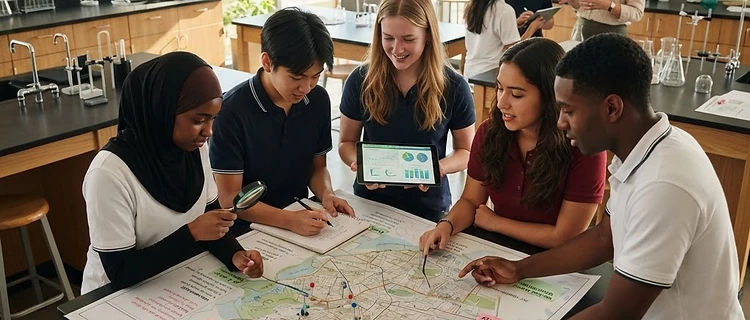
Welcome to Module 3, where we translate syllabus theory into the dynamic environment of the classroom. As an IGCSE Environmental Management educator, your primary challenge lies in bridging the gap between abstract scientific processes and the tangible, location-specific realities of geographic study. In this module, we focus on the art of teaching local ecosystem case studies as the foundation for broader environmental understanding. Think about your local context: is it an urban heat island, a coastal mangrove, or a drought-prone agricultural zone? By grounding your curriculum in the local environment, you shift students from passive information consumers to active, analytical thinkers who can connect global environmental concerns to their own backyards.
Pause and reflect for a moment: how often do your students find the textbook content detached from their immediate surroundings? To counter this, we introduce the pedagogical strategy of local ecosystem mapping. By choosing a site within walking distance of your school, you provide students with primary data collection opportunities. For example, rather than simply reading about biodiversity loss, students can conduct a quadrat survey in a local park or record sound pollution levels on a busy street. This interdisciplinary approach—combining biological sampling with geographic human-impact mapping—not only enriches their understanding but also equips them with the practical skills required for Paper 2 management strategies, where they must often interpret field data to propose realistic solutions.
Managing interdisciplinary data analysis is perhaps the most daunting aspect for both teachers and students. Many learners struggle to synthesize scientific data, such as soil pH levels, with geographic variables like land-use patterns. Your role is to act as a scaffold, providing structured data sets that guide students through the process of correlation. Try this in your classroom this week: present your students with a raw data set from your local ecosystem and ask them to produce three distinct graphical representations. Challenge them to explain which graph best communicates the relationship between human activity and environmental change. This exercise is critical because it forces students to think critically about how different data formats serve different analytical purposes in an exam setting.
Preparing students for Paper 2 management strategies requires a departure from rote memorization towards a focus on evaluative inquiry. In this paper, examiners look for more than just a statement of a problem; they expect a logical management cycle: identification, data collection, evaluation of options, and sustainable implementation. When teaching case studies, use the 'Three-Lens Framework': economic viability, social necessity, and environmental sustainability. For every local case study you teach, ask students to simulate a mock management board meeting where they must defend a proposal using evidence collected from their site-specific research. This mirrors the high-level demand of the IGCSE curriculum and ensures students are comfortable justifying their reasoning under pressure.
Inclusive pedagogy dictates that we differentiate these high-level tasks to support every learner. For students requiring additional support, provide 'sentence starters' and annotated maps that break down complex environmental interactions into manageable segments. For your high-achieving students, introduce the concept of conflicting stakeholder perspectives. For instance, if the case study involves a new wetland development project, task these students with analyzing the trade-offs between residential expansion and biodiversity protection. This ensures that the lesson remains challenging for all while adhering to the core assessment objectives found in the CAIE syllabus documents. Remember, your feedback during these sessions is the primary tool for shaping student exam readiness.
Finally, consider how to integrate your classroom artifacts into your digital teaching portfolio as you prepare for your final oral readiness review. Every lesson plan, student-annotated rubric, and photograph of a student-led data analysis session serves as evidence of your professional competence. As you complete this module, keep a reflective journal on how your approach to teaching local ecosystems has evolved. When you select your portfolio pieces, choose those that demonstrate not only your content knowledge but also your ability to manage classroom discussions, facilitate group work, and provide actionable feedback that results in measurable student growth. This commitment to evidence-based practice is exactly what sets a MastaLearn-trained teacher apart in the competitive international school landscape.