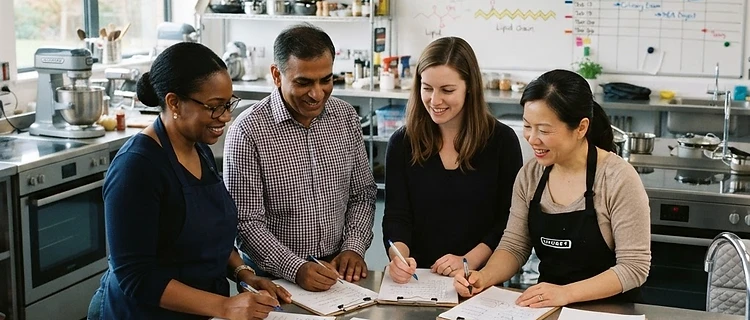
Bridging Theory and Practice
The core challenge for any IGCSE Food and Nutrition teacher is ensuring that complex macronutrient chemistry does not exist in a vacuum separated from the physical act of cooking. Your students need to understand how protein denaturation or starch gelatinization directly influences the success of their practical exam dishes. When you teach the function of macronutrients, anchor these concepts in the specific tasks found in the Cambridge practical exam criteria. For example, when discussing the role of fats in aeration, link it immediately to a sponge cake recipe rather than a textbook definition. Pause and reflect on your current lesson plans: are your theory sessions physically grounded in the kitchen lab? Try this in your classroom today: ask students to label a recipe step with the corresponding chemical change occurring during that specific process. By consistently bridging these domains, you transform abstract syllabus requirements into tangible skills that students can apply under the intense pressure of the 150-minute exam environment.
Decoding Command Words in Practical Contexts
Command words are the bridge between theory and the assessment objectives defined by CAIE. Words such as explain, evaluate, and describe are not merely linguistic nuances; they represent different depths of cognitive processing that students must demonstrate when justifying their choice of dishes or ingredients. In your daily instruction, explicitly teach these command words by showing students how they translate into marks on a rubric. If a candidate is asked to explain the nutritional value of a specific protein, they must go beyond stating its source and delve into its biological function and relevance to dietary needs. Take a moment to review a recent student script and highlight every command word present in the question. Are your students answering the command or just providing general information? Challenge your learners to rewrite their responses by focusing on the specific intent of the verb, ensuring their answers are precise, evidence-based, and directly aligned with the syllabus expectations.
Embedding Assessment Objectives in Daily Routines
Embedding assessment objectives into routine practical lessons is the most effective way to prepare candidates for the rigours of the 2.5-hour exam. You should structure your weekly lab sessions to mimic the marking criteria, using simplified versions of official rubrics to provide immediate, actionable feedback. Instead of general praise, use the specific assessment language of the syllabus, such as focus on technical skill, hygiene, or time management. This creates a classroom culture where students view every practical session as a high-stakes simulation rather than a casual cooking task. Consider this challenge: during your next practical, provide a peer-assessment checklist that requires students to justify the selection of a specific starch or fat source based on its chemical properties. By making this a habit, you reduce exam anxiety and ensure that the theoretical knowledge required for the written components becomes second nature, allowing students to focus their limited energy during the exam on executing their time-plans effectively.
Managing Macronutrient Chemistry as a Competitive Advantage
Understanding the chemistry of macronutrients is not just an academic requirement; it is a competitive advantage that can help students recover from minor mishaps during the practical exam. When a student understands the science behind why a sauce splits or a soufflé collapses, they can diagnose the issue and potentially correct it in real-time. This level of mastery is what separates top-tier candidates from those who simply follow recipes by rote. To cultivate this, incorporate trouble-shooting scenarios into your theory lessons. Ask your students to predict what would happen if the temperature is too high or the ratio of ingredients is slightly off. This proactive approach turns chemistry into a problem-solving tool. Try this in your classroom: deliberately introduce a minor error in a mock recipe and have students use their knowledge of nutritional chemistry to hypothesize the outcome and suggest a corrective action, reinforcing their role as master practitioners.
Building a Portfolio of Evidence for Assessment Readiness
As a teacher, your goal is to build a coherent portfolio that demonstrates how your classroom practice maps to the CAIE standards. This involves documenting not just what you teach, but how your teaching strategies lead to measurable student outcomes. By consistently aligning your lesson content with the syllabus objectives, you create a trail of evidence that validates your pedagogical choices for both your professional growth and potential employers. Use your reflective journal to document specific moments where students successfully connected macronutrient theory to their practical work. This is the cornerstone of your capstone portfolio. Remember that an outstanding portfolio tells a story of iterative improvement, where you refine your methods based on student performance data and examiner reports. As you move through this course, keep collecting these artefacts, ensuring that each piece demonstrates a deep understanding of the practical exam setup and the scientific rigour expected within the 0648 framework.