Designing the Exam-Ready Kitchen Environment
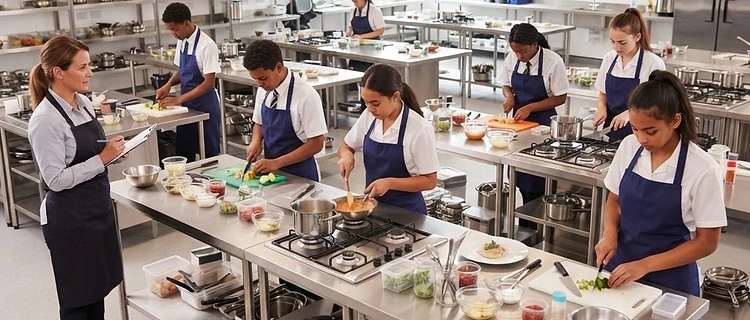
The 2.5-hour Cambridge IGCSE practical exam requires an environment that mimics the pressure of a professional kitchen while adhering strictly to safety regulations. As an instructor, your first task is creating a layout that facilitates efficient movement and rapid tool access. Consider the ergonomics of the space, ensuring that ingredients and equipment are pre-set according to the candidates' individual time plans to avoid cross-traffic collisions during the high-stress cooking phase. To make this learner-centred, involve your students in the setup process, asking them to map out their own workstation flow during practice runs. Pause and reflect: How does your current kitchen layout impede or support the fluidity of a 150-minute exam sequence? By treating the kitchen as a tactical space rather than just a room, you foster a sense of ownership in students. Try this in your classroom: place a camera overhead during a practice run to identify bottlenecks where students waste the most time during their assessment sprint.
Implementing Timed Precision and Scaffolding
Managing a 2.5-hour exam sprint is essentially an exercise in cognitive load management. Trainee teachers must learn to scaffold the time plan creation process so that students do not just list tasks, but prioritize them based on macronutrient chemistry and food safety requirements. This involves teaching students to build in specific buffers for cleaning, chilling, and serving. To differentiate this, provide high-achieving learners with blank time-plan templates that require them to calculate complex heat-transfer sequences, while providing students needing more support with partially completed plans that act as logical prompts. Remember that the mark scheme penalizes poor time management significantly, so your pedagogical focus must shift from merely teaching recipes to teaching the mastery of the clock. Try this in your classroom: give students a disordered list of tasks for a complex dish and challenge them to reorder them based on logical nutritional processing and safety protocols within a strict twenty-minute window.
Peer-to-Peer Accountability and Group Dynamics
Promoting accountability in the kitchen is vital, especially when preparing students for the isolation of the formal practical exam. Use grouping strategies that pair students of varying skill levels to facilitate peer-to-peer mentoring during formative simulations. This is not about letting the stronger student do the work, but rather about tasking one student to act as an evaluator for their partner based on the official Cambridge rubric. This encourages the development of metacognitive awareness as they observe common errors, such as improper cutting techniques or failing to calibrate scales. Pause and reflect: What specific criteria can you use to ensure peer feedback is actionable rather than superficial? By formalizing this relationship, you prepare students for the reality that in an exam, they are their own primary safety officer. This active learning approach ensures that every student is consistently engaged in critically assessing culinary standards throughout the duration of the 150-minute practical session.
Differentiated Instruction for Diverse Exam Needs
Inclusive classroom management during practical assessments requires a tiered approach to support students with varying levels of confidence and technical ability. For students who struggle with the cognitive demands of the 2.5-hour sprint, incorporate visual cue cards that outline the critical path of their chosen dishes, focusing on high-risk safety checkpoints. For extension pathways, challenge advanced students to articulate the nutritional chemistry behind their ingredient substitutions in the written section of their planning. By diversifying the complexity of the tasks without sacrificing the rigour of the assessment standards, you ensure that all students reach their potential. In your portfolio, document how these tiered supports directly map to the syllabus objectives and examiner requirements. Try this in your classroom: create a sensory checklist that helps students track their progress through the exam phases using tactile markers, allowing them to remain focused on task completion despite the mounting environmental noise and pressure of the kitchen.
Building the Evidence Pack for Readiness
The transition from practitioner to effective IGCSE examiner requires a disciplined approach to evidence collection. As you develop your lesson plans, focus on the alignment between your classroom management strategy and the formal assessment objectives. Your digital teaching portfolio should contain clear examples of how you have adapted your instructions to cater for diverse learners within a high-stakes timing constraint. Documenting these successes requires a commitment to reflective practice; capture feedback from peer observations and student performance data to defend your pedagogical choices in the final oral readiness review. This phase is about professional self-evaluation and refining your ability to manage both the kitchen environment and the emotional well-being of the candidates during the examination. Consider how you will present these classroom artifacts to employers as proof of your capability to lead a high-achieving, compliant, and supportive food preparation department that consistently produces exceptional candidate outcomes.