Understanding the Medium-Specific Pedagogical Landscape
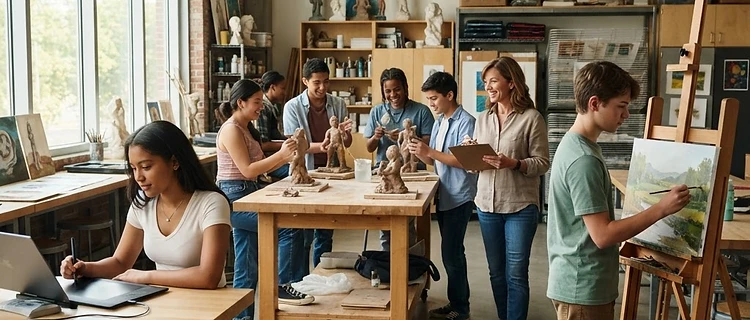
Supporting diverse media in the IGCSE Art and Design studio requires moving beyond general instruction to provide medium-specific scaffolding. Whether a student is navigating the tactile complexities of a 3D clay construction or the technical intricacies of digital vector illustration, your role is to translate Assessment Objective 2, which focuses on exploring and selecting appropriate resources and media, into actionable classroom steps. For fine art, this might involve demonstrating controlled mark-making; for 3D, structural integrity testing; and for digital, managing layer architecture. Pause and reflect: Look at your current student portfolio list. How many different mediums are represented, and where are the most common technical bottlenecks occurring? By mapping these bottlenecks to the assessment objectives, you ensure that your pedagogical support directly impacts the final mark. Try this in your classroom this week: create a medium-specific checklist for one of your struggling students that focuses on the material exploration requirements of the syllabus.
Scaffolding Fine Art: From Observation to Refinement
Fine art students often struggle with the transition from initial first-hand recording to the refinement phase of a portfolio. To support this, you must scaffold the observation process. Instead of asking for a finished drawing, guide students to create a series of material studies that document the properties of charcoal, watercolor, or oil. This directly supports the requirement for purposeful exploration. An effective scaffold here is a peer-critique rubric that asks students to identify how their choice of medium communicates their intended meaning. Consider the diversity of your learners: those with high technical ability might need prompts that push them toward complex compositions, while those who are less confident need a structured starting point like a tonal grid exercise. As you design your lesson plan for the portfolio, ensure you include these tiered tasks. Remember, the goal is to provide evidence of progression that an examiner can easily trace through the candidate boards.
Navigating 3D Construction and Spatial Thinking
3D media presents unique logistical and pedagogical challenges, particularly regarding the documentation of process development. Because physical objects are difficult to capture in 2D portfolios, students often struggle to communicate their design journey. Scaffolding in 3D should prioritize the iterative process of prototyping. Encourage students to photograph their work from multiple angles during the building phase, ensuring they annotate the structural decisions they made to solve balance or joinery issues. This documentation is gold for examiners, as it evidences problem-solving skills within the assessment criteria. Try this: set up a mobile photography station in your classroom with a simple neutral backdrop so students can document their 3D process at the end of every lesson. This practical habit reduces the pressure during the final curation phase and provides clear, evidence-based content for their portfolios. How does this align with your current internal standardization procedures for assessing 3D work?
Digital Media: Workflow and File Literacy
Digital media students are often prone to over-reliance on filters and pre-set effects, which can mask genuine skill development. Your intervention should focus on teaching a disciplined workflow that tracks the development of digital assets. Encourage students to save incremental versions of their work and include snapshots of their layer panels or brush settings as part of their creative evidence. This demonstrates an intentional process rather than an accidental result. Scaffolding for digital learners might also include providing them with specific software tutorials that teach technical control, such as pen-tool mastery or color theory applications. When preparing your differentiated lesson plan, consider how you can include extension tasks that challenge digital artists to bridge their digital output with physical sketchbook research. This holistic approach ensures that their work remains grounded in the IGCSE requirement for rigorous, iterative development of ideas and technical mastery.
Inclusive Practice and Internal Standardization
Inclusive practice is at the heart of effective classroom management in the IGCSE Art and Design environment. Whether your students are working in digital, fine art, or 3D, you must ensure that your feedback loop is equitable and accessible to all learners. This means differentiating your language and your expectations based on individual starting points while keeping the mark scheme fixed as the common anchor. During internal standardization, review how different medium-specific scaffolds are influencing student outcomes. Are the supports you put in place helping students reach the higher tiers of the rubric, or are they inadvertently limiting their creative autonomy? Engage with your peers to share these medium-specific resources. By aligning your strategies, you ensure that the standard of work remains consistent across your department. Reflect on your lesson plan: have you included explicit pathways for students to self-assess their own progress against the core assessment objectives?