Understanding the Cambridge Practical Video Mandate
The foundation of successful Cambridge IGCSE Physical Education moderation lies in the technical and pedagogical compliance of video evidence. As educators, we must treat the video submission not merely as a recording, but as a critical examination document that mirrors the rigor of written assessments. When you film your candidates, you are effectively acting as the first point of moderation. The syllabus dictates strict requirements for camera placement, audio clarity, and the identification of candidates throughout the performance. A common pitfall is the failure to properly distinguish candidates in team sports, which often leads to significant delays or score adjustments during the external moderation process. Pause and reflect on your current recording setup. Do you have a consistent system for numbering candidates that remains visible from a distance? Remember that your goal is to provide the moderator with an unimpeded view of the candidate’s skill execution in isolation and context.
Technical Standards and Camera Positioning
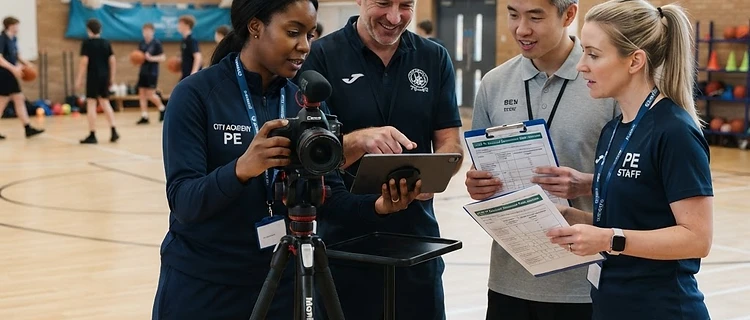
Camera positioning is arguably the most frequent cause of administrative penalties in IGCSE physical education submissions. Moderators require a view that captures both the individual skill execution and the tactical movement within the sport. If the camera is too far away, individual technique is obscured; if too close, the tactical awareness and movement off the ball vanish. Try this in your classroom this week: perform a trial run of a football or netball drill and review the footage specifically for the clarity of technical cues like foot placement or hand positioning. You should be able to clearly identify the candidate performing the activity without needing to guess based on their kit color. Always ensure the camera is mounted on a tripod to avoid the shaky footage that often plagues handheld recordings. Steady, high-definition video is non-negotiable when demonstrating the criteria outlined in the syllabus document for each specific physical activity.
The Art of Candidate Identification
Identifying candidates correctly is an administrative task that carries heavy stakes during the moderation window. Cambridge requires that each candidate is easily identifiable throughout the entire duration of their performance. The most reliable method is the use of clearly numbered bibs that contrast sharply with the team kit. Some teachers mistakenly rely on verbal identification or internal logs, which are insufficient and risky if the moderator cannot hear the audio or match the voices to the visuals. During your next practical session, implement a formal identification protocol where each student stands in front of the camera and states their name and number before beginning their skills assessment. This simple ritual builds familiarity with the process and ensures that no candidate is left unidentifiable. Think about how this practice prepares your students for the formal assessment by establishing an environment of professional discipline and clear documentation.
Analyzing Common Pitfalls and Moderation Penalties
Moderation penalties often stem from seemingly minor oversights in the preparation phase. Common errors include poor lighting in indoor facilities, background noise that masks verbal cues, or failing to edit clips to the specific time limits prescribed by the syllabus. Another significant issue is the inclusion of excessive footage that does not showcase the required skills, forcing the moderator to spend unnecessary time searching for the relevant evidence. To avoid this, carefully map out the sequence of activities for every candidate, ensuring that each assessment session follows a logical flow that matches your mark sheets. If you are submitting multiple activities, organize your files into a clear, digital folder structure that corresponds to your candidate list. Reflect on your last moderation cycle or a colleague's experience: what was the primary source of feedback from the moderator regarding the technical presentation of the evidence provided for the cohort?
Integrating Assessment Objectives into Video Work
Ultimately, your video submission is the physical embodiment of your internal assessment and must align perfectly with the Cambridge Assessment Objectives. When you teach your students, integrate the moderation requirements into the lesson so that they understand why filming certain angles or highlighting specific technical movements is necessary. For example, explain to students that their defensive footwork must be captured from a side angle to be accurately marked against the rubric. By making students partners in the video creation process, you improve the quality of the evidence and simultaneously deepen their understanding of the assessment criteria. As you move forward in this course, consider how you can transform your practical sessions into high-fidelity evidence packs that require minimal effort to finalize before the submission deadline. This proactive approach not only satisfies the examiner's requirements but also models the precision and professional excellence expected in a high-performing international school environment.